
SEAT TOLEDO ABS REPAIR

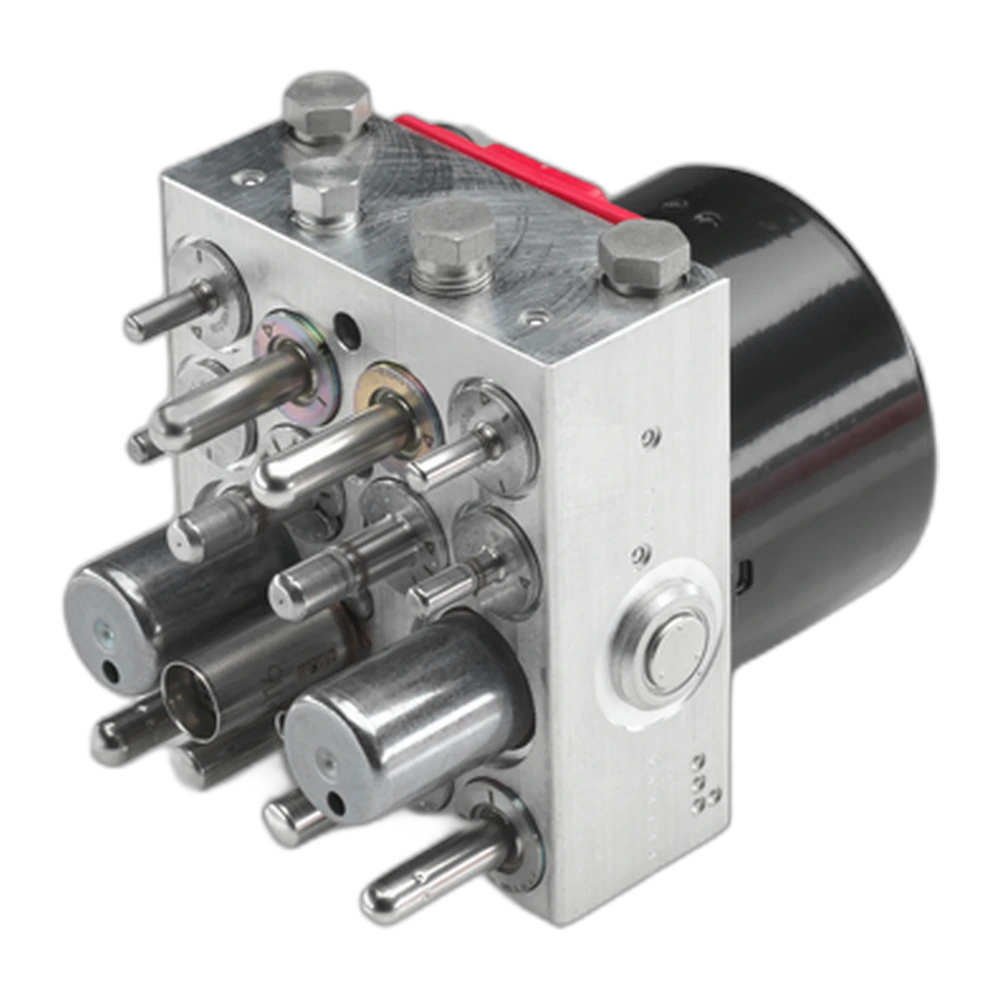
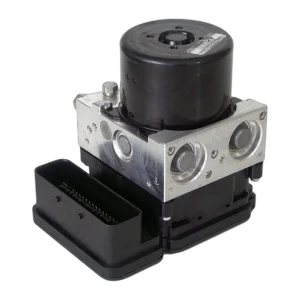
MÓDULO ABS SEAT TOLEDO
350,00 € + VAT
We permanently fix any SEAT ABS module fault through our comprehensive remanufacturing. To repair the SEAT ABS module, you just need to send us your unit together with the fault codes. Our technicians will diagnose the SEAT ABS control unit and carry out an exact rebuild, replacing the faulty components. Get your car back to full safety, with a warranty.
You only pay once your module has been repaired
- Repair in 24/48 h
- No upfront payment
- Up to 2 years’ warranty
- Fixed price, no surprises
Are you a professional?
Let us know if you are a garage or trade professional so we can offer you specific terms.
TOLEDO MODULE
SEAT TOLEDO ABS
SEAT Toledo ABS repair means returning your own remanufactured SEAT Toledo ABS control unit to you, with the hydraulic unit and circuit board restored, with no need to recode the vehicle or rely on a breaker’s yard spare of uncertain compatibility. The Toledo was built between 1991 and 2019 in several generations, each with its own control unit part number, and a 2013 SEAT Toledo ABS module is one of those that reach the workshop most often, as it belongs to the generation with the most cars on the road today. This is the SEAT Toledo version for which we repair the ABS module. If you can’t find your car, contact us and we’ll help you.
We can't find that model. Escríbenos with the module's part number and we'll tell you if we can repair it.

SEAT Toledo
1991 – 10/2004 / 2012 – 2019
Standard ABS module

SEAT Toledo 5P2
11/2004 – 2009
ATE MK61 module
Same model, two different modules
Not every Toledo has the same ABS: depending on the version and year, it is fitted with one module or another.
-
Standard ABS module
The standard ABS fitted to most SEAT models: hydraulic unit, pump and control unit in a single block. We remanufacture it in full and keep its original coding.
Request repairModelsToledo
-
ATE MK61 module
The evolution of the MK60 launched by ATE in 2004: hydraulic unit, pump and the control unit for ABS and stability control in a single block. Fitted by many European and Japanese brands.
View module detailsModelsToledo 5P2
How to tell which one you have: find your car in the list of models above; each card shows the module it has. If in doubt, send us a photo of the module's part number and we will tell you which it is.

OUR WORK PROCESS
NITO MOTOR REPAIRS FIRST, THEN YOU PAY
Simple · Fast · Efficient
PLACE YOUR ORDER
Request your repair online in minutes, with no upfront payment. Nito Motor repairs first, then you pay.
GARAGE COLLECTION
Depending on what you choose, you ship it yourself or we collect the part from the trusted private address or garage you give us.
TECHNICAL REPAIR CENTRE
Diagnosis and repair in 24/48 h by specialist technicians. Guaranteed repair, whatever the type of fault.
CERTIFIED DELIVERY
We send you the invoice for payment and return the repaired module to the garage or trusted address, with a warranty of up to 2 years.
WHY DOES IT FAIL?
SEAT TOLEDO ABS FAULT Symptoms
The Seat Toledo has no table of ABS fault codes accessible to the user, so a SEAT Toledo ABS fault is detected by the symptoms it causes while driving rather than by a specific code on the dashboard. It’s always best to start by checking the brake fluid level and the condition of the battery, because low voltage can turn the warning light on without there being any real fault in the SEAT Toledo ABS module. If the warning light doesn’t go out after that check, these are the most common symptoms:
ABS warning light on without a real fault
Before thinking of a module fault, check the brake fluid level and the condition of the battery: low voltage can turn on the SEAT Toledo ABS warning light without the control unit having any internal fault.
Brake pedal with irregular travel
Feeling the pedal harder on some stops than on others, or travel that is no longer consistent, is one of the earliest signs that the Toledo’s ABS is starting to fail.
Inconsistent braking between wheels
If one wheel grips earlier or harder than the others when braking, especially on wet roads or in an emergency stop, the ABS is no longer managing brake force distribution correctly.
ESP warning light on together with the ABS light
On the Toledo, the ABS and ESP share the same electronic control unit, so seeing both warning lights on at the same time usually points to a single internal fault in the module, not two separate faults.
Intermittent fault due to corroded connectors
Over the years and the miles, the SEAT Toledo ABS module connectors commonly corrode, causing a fault that comes and goes with no fixed pattern, especially on the oldest cars.
Diagnosis with an OBD reader before repairing
An OBD reader lets you check whether fault codes are stored in the control unit and rule out the problem coming from a wheel speed sensor rather than the module itself.
ABS REPAIR PRICE
ABS module repair price
Why choose our ABS control unit repair over a new one?
WHAT OUR CUSTOMERS SAY
★ Verified ratings · Google Reviews
-

Zaida & Tonho
Estamos muy satisfechos con Nito Motor.
Teníamos un problema de Módulo de ABS en una Volkswaggen Caddy 4 Motion del 2014, ya revisado por otros profesionales del sector, sin solución ninguna, precios desorbitados y con muy poca información del problema, sobre todo para explicarle al cliente.
Cuándo contactamos con Nito Motor, me sorprendió que nos explicaran tan claramente su método de trabajo y los posibles fallos de ese módulo ABS ( fue muy fácil explicárselo al cliente ) y así fue:
Nos llamaron, explicaron el problema, lo solucionaron y además nos dieron consejos para poner en marcha el vehículo.
Después de su revisión/reparación y nuestra programación electrónica el vehículo ha vuelto a funcionar sin ningún fallo de ABS después de 2 AÑOS!!!
Muchísimas gracias al equipo Nito Motor, ya que esa Caddy ya tiene ITV y vuelve a circular por las calles.
Nuestro cliente y nosotros estamos infinitamente agradecidos.
Un saludo. -

javier arostegi
Respondieron amablemente las dudas por teléfono. Reparación en un par de días. Seriedad y profesionalidad. Exactamente lo presupuestado. Ya he pasado la ITV. Lo recomiendo.
-

MotoCenterActur Taller
Todo perfecto, ya llevamos unos cuantos enviados a reparar y lo hacen rápido y bien, una vez montados funcionan correctamente.
-
Fernando Bocigas martin
No le doy más estrellas por qué no se puede. Llame por una avería muy común en las BMW (módulo Abs) me corria un poco de prisa por que tenía un viaje y se lo comenté se lo envié y en un día y poco lo tenía reparado y preparado para llegar y montar. Profesionales de verdad. Un placer
-

Juanma Hernandez Vasco
Professional and friendly service. A 10.
-

Karsten Müller
Die Abwicklung der Reparatur meines defekten ABS Modul (2003er BMW R1150GS) war sehr einfach, schnell und kompetent. Wenn man auf der Website den Reparaturauftrag erteilt hat, dann sollte man einen Screenshot vom Auftrag machen, denn ich habe keine schriftliche Bestätigung erhalten. Ist aber kein Problem. Achtet auf die Preise - auf der Website ist Netto angegeben, kann überraschen, weil wir es in D nicht gewohnt sind, mit Nettopreisen einzukaufen. Incl Transportversicherung betrugen die Reparaturkosten somit ca. 900 Euro, deutlich günstiger als andere Angebote. Das Gerät würde pünktlich, wie vereinbart, von einer Spedition 2 Tage nach Auftragserteilung an einem Mittwoch abgeholt und nach Spanien geschickt. Am folgenden Dienstag erhielt ich bereits die Info, dass die Reparatur fertig gestellt wurde. Super schnell. Ich habe überwiesen und den Screenshot der Überweisung mitgeschickt. So wurde das ABS bereits am darauf folgenden Mittwoch zurück gesendet und war am Montag wierder zu Hause. Das Ganze dauerte keine zwei Wochen. Das Gerät funktioniert wieder einwandfrei.
-

Jesus Prieto
Well, 3 months ago they repaired a Seat León module for me, and from the very first moment they treated me in a super professional way. They were quick with the repair and practical with collecting the part and delivering it. No problems so far, I recommend them one hundred per cent.
-

CREATIVE FPV
-

Rafael Furtado
Impecáveis na reparação do meu módulo ABS, do meu astra GTC foi necessário uma nova peça na qual fui avisado previamente,em todo o acompanhamento.
Obrigado -

Marco Pérez Rodríguez
What can I say about these guys… nothing but kindness and professionalism; whatever problem you have with your module, they give you a solution and guide you towards the best and cheapest option for me. A 10, I recommend them without hesitation, with my eyes closed
Nito Motor newsletter
GET ABS DIAGNOSTIC TIPS IN YOUR INBOX
A monthly newsletter for garages and mechanics: real fault cases, technical data sheets and diagnostic news.
PRACTICAL TIPS
Useful advice for everyday work in the garage.
TECHNICAL DATA SHEETS
Clear, up-to-date documentation.
NEWS
The latest in diagnostics and technology.
No spam. Unsubscribe at any time.
Latest blog articles
Technical tips · Diagnostics · News

What is ABS in a car and what is it for?
ABS, or anti-lock braking system, is the technology that stops the wheels from locking when you brake hard, so you…
Continue reading
Why do brake pads make noise when you brake?
Brake pads usually make noise when something in or around them is not right; wear or dirt are among the…
Continue reading
Why does the steering wheel vibrate when you brake?
If the steering wheel vibrates when braking, it is almost always a sign that something is wrong with the car's…
Continue reading
Discover how a vehicle’s braking system works
ABS is the part of the braking system that stops the wheels locking under hard braking, so you can keep…
Continue reading