

What is ABS in a car and what is it for?
In short
ABS, or anti-lock braking system, is the technology that stops the wheels from locking when you brake hard, so you can keep control of the car in an emergency stop. Below you will discover which parts make it up, how it acts in fractions of a second and what care it needs to keep working properly.
If you are a motoring enthusiast, you have surely heard of ABS, but do you really know what it is and what it is for?
ABS, which stands for “Anti-lock Braking System”, is an essential technology in modern vehicles. It not only improves road safety, but can also be the difference between a scare and a serious accident.
In this article, we will tell you everything you need to know about this system, from its definition to how it works, and why it is crucial to keep it in perfect condition, as we are experts in ABS module repair for cars and motorcycles.
Definition of an ABS module: what does it do?
The ABS module is the main organ behind the anti-lock braking system. This component is responsible for regulating the braking pressure at each wheel to prevent them from locking, especially in emergency situations.
By preventing the wheels from locking, the ABS system allows the driver to keep control of the vehicle, even when braking hard. It is like having an invisible co-pilot who helps you make critical decisions in milliseconds.
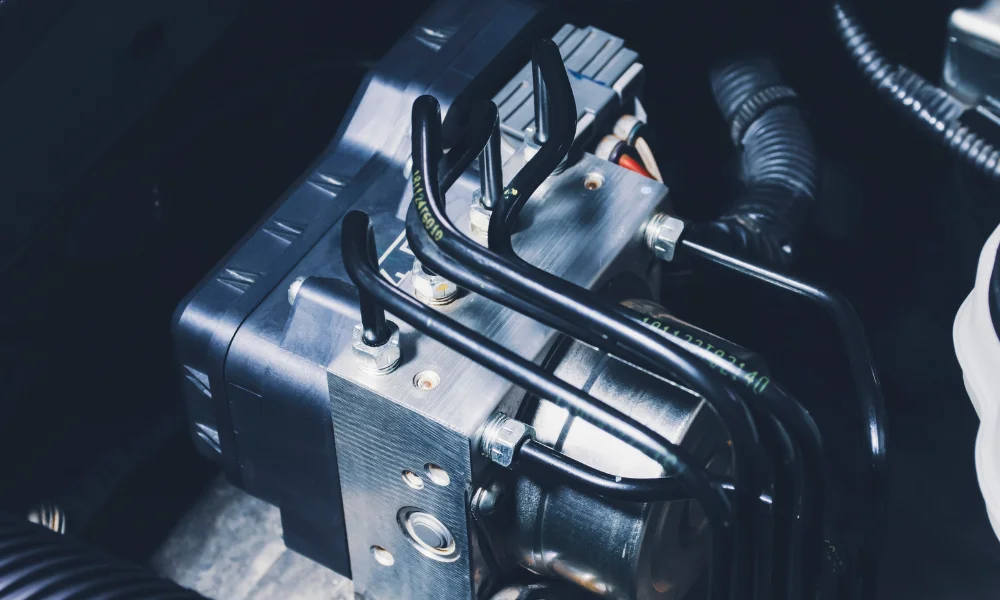
How does an ABS module work?
Understanding how ABS works will help you better appreciate its importance. Basically, ABS acts when it detects that one or more wheels are about to lock during braking. But how does it do it? This is where technology comes into play.
Main components of ABS
ABS is made up of several key elements that work together to prevent the wheels from locking. These are:
Wheel speed sensors
These sensors are located at each wheel and measure the speed at which they turn. Their job is to detect any sudden deceleration that could indicate imminent locking. They are the “eyes” of the ABS system.
Electronic control unit (ECU)
The ECU is the “brain” of the ABS. It receives information from the speed sensors and, if it detects that a wheel is about to lock, instructs the pressure modulator valves to adjust the braking pressure. It is fast and precise, making decisions in fractions of a second.
Pressure modulator valves
These valves are the “hands” of the system. They control the braking pressure at each wheel, reducing it when necessary to prevent locking and keeping the car manoeuvrable.
Hydraulic pump
The hydraulic pump is the “heart” of the system. It is responsible for returning the brake fluid to the main circuit so that it regains its usual pressure and the vehicle can brake correctly.
Operating principle
ABS operates on a simple but effective principle: keeping control of the vehicle during an emergency stop. To achieve this, the system goes through several stages while it operates.
Detecting wheel lock
When you brake hard, the wheel speed sensors detect any sudden deceleration that could lead to the wheels locking. This information is sent to the ECU.
Modulating the braking pressure
On receiving the signal of possible locking, the ECU instructs the modulator valves to adjust the braking pressure. This adjustment is made continuously until the wheel turns freely again.
Activation and deactivation cycles
The modulation process takes place in rapid cycles of activation and deactivation. This constant pulsing ensures the wheels do not lock, allowing the vehicle to keep traction and remain steerable during braking.

Benefits of the ABS module
ABS not only improves safety, it also provides other benefits that we often overlook:
- Better vehicle control: By preventing the wheels from locking, ABS lets you keep control of the car during an emergency stop.
- Shorter braking distances: In many situations, ABS can reduce the distance you need to stop the car, which can be crucial to avoiding collisions.
- Greater stability on slippery surfaces: ABS is especially useful on wet or icy roads, where the risk of the wheels locking is higher.
Maintenance and care of the ABS system
Like any other system in your vehicle, ABS needs proper maintenance to work correctly. Neglecting it can lead to faults that compromise your safety.
Diagnosis and repair of ABS modules
If you notice that the ABS warning light on your car’s dashboard comes on, it is a sign that something is not right. It could be a damaged speed sensor, a problem in the ECU or a leak in the pressure modulator valves. In these cases, it is crucial that you go to a specialist workshop, such as Nito Motor, for a proper diagnosis and repair.
The importance of preventive maintenance
Carrying out regular preventive maintenance on the ABS system can save you a lot of trouble. This includes checking the condition of the speed sensors, making sure the ECU works correctly, checking that there are no leaks in the modulator valves and changing the brake fluid at least every 2 years.
Even if the ABS module appears to be working correctly, the hygroscopic properties of brake fluid mean it absorbs moisture, increasing its water content over time and causing the components to oxidise. An ABS system in good condition is vital for your safety on the road.
Conclusions
The ABS module is an essential component of modern vehicle safety. With its ability to prevent wheel lock and keep control of the car during emergency stops, this system has saved countless lives since it was introduced.
To ensure ABS always works at full capacity, it is essential to carry out regular maintenance and watch out for any sign of a fault. That way, you can enjoy the road with the peace of mind of knowing you are well protected.
At Nito Motor, we are experts in the diagnosis, repair and maintenance of ABS systems. If you have any questions or need assistance, do not hesitate to contact us. We are here to help you keep your car in the best condition!


