

ABS light on: what does it mean and what should you do?
In short
An ABS light on means something is not working properly in the anti-lock braking system, the one that stops the wheels locking under emergency braking. It is a warning you should not ignore. Read on to find out its most common causes, the risks of driving like that and what to do when it comes on.
An ABS light on in the dashboard of your car or motorcycle indicates that something is not working properly in the Anti-lock Braking System (ABS).
This system is vital for the safety of your vehicle, as it helps prevent the wheels from locking during emergency braking, allowing you to keep control of the vehicle. In this article, we explain the possible causes of the ABS light coming on, the consequences of ignoring it and what you should do to fix it.
Definition and function of ABS (Anti-lock Braking System)
ABS, or Anti-lock Braking System, is a technology designed to prevent the wheels from locking under hard braking. By preventing lock-up, ABS allows the wheels to keep turning, which in turn maintains the vehicle’s ability to steer and reduces the braking distance in most conditions. This is especially useful on slippery surfaces, such as wet or icy roads.
The ABS system is made up of several components, including speed sensors on each wheel, an electronic control unit and a hydraulic pump. When one of these components fails, the ABS light commonly comes on in the dashboard, indicating that the system is not working properly.
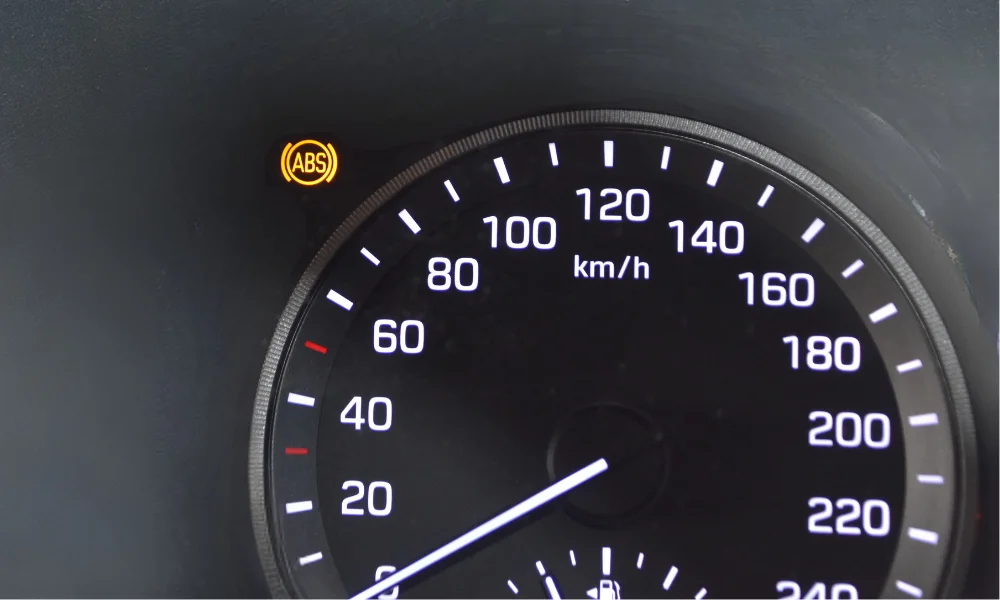
Common causes of the ABS light coming on
There are several reasons why the ABS light can come on in your vehicle. Below we set out the most common ones:
Faulty wheel speed sensor
The wheel speed sensor is responsible for monitoring how fast each wheel is turning and sending this information to the ABS control unit. If one of these sensors fails or gets dirty, the control unit may receive incorrect information, causing the ABS light to come on.
Problems in the ABS control module
The control module is the “brain” of the ABS system. It receives data from the wheel sensors and determines when to activate the hydraulic pump to prevent the wheels from locking. If this module develops faults, it can cause the ABS light to come on in the dashboard.
ABS hydraulic pump failure
The hydraulic pump is responsible for maintaining the right pressure in the brakes to prevent lock-up. If this pump fails, the system will not be able to work properly, which will result in the ABS light coming on.
Blown fuses or faulty electrical connections
The ABS system relies on a network of electrical connections and fuses to work properly. A blown fuse or a faulty electrical connection can interrupt the flow of electricity to the system, causing the ABS light to come on.
Fault in the regulating valves or solenoid valves
At Nito Motor we receive many enquiries like this one: “My car fails its MOT because one of the wheels does not brake. What is causing this problem?”
In ABS brakes there is a common fault that the ABS warning light does not detect and therefore does not come on for, making it impossible for us to notice until a mechanic inspects the vehicle thoroughly.
Basically, this problem consists of the regulating valves sticking because of rust and stopping the system from working properly. As a result, the chances of a wheel not braking or locking are very high, causing your vehicle to fail its MOT.
What to do when the ABS light comes on
When the ABS light comes on, it is important to take immediate action to identify and fix the problem. Here are some initial steps:
Check the owner’s manual
The first thing you should do when the ABS light comes on is consult your vehicle’s owner’s manual. This document usually contains specific information about what may be causing the light to come on and the steps to follow.
Visual inspection of the sensors and cables
Carry out a visual inspection of the wheel speed sensors and the cables connecting them. Look for signs of damage, dirt or corrosion that may be affecting how they work.
Using an OBD-II scanner to diagnose the problem
An OBD-II scanner can be an invaluable tool for diagnosing problems in the ABS system. This device connects to your vehicle’s diagnostic port and can read the fault codes stored in the ABS control module, helping to identify the exact cause of the light coming on.

Consequences of ignoring the ABS light
Ignoring the ABS light can have serious consequences for both safety and the overall performance of your vehicle’s braking system.
Safety risks of driving without working ABS: Driving with the ABS out of action increases the risk of losing control of the vehicle during emergency braking, especially in low-grip conditions. This can lead to serious, even fatal, accidents.
Impact on the overall performance of the braking system: Your vehicle’s braking system relies on the ABS working properly to maximise its effectiveness. If the ABS is not working, your vehicle’s braking capability may be compromised, which will affect its overall performance.
How to fix problems with the ABS light on
If you identify a problem with the ABS system, it is important to deal with it straight away. Here are some common solutions.
Repair or replacement of faulty sensors: If a wheel speed sensor is faulty, it may need repairing or replacing to restore the ABS to proper working order.
Inspection and repair of the ABS control module: ABS control module repair may be necessary if it develops faults. In some cases, the module may need to be replaced to ensure the system works properly.
Preventive maintenance to avoid future faults: Regular preventive maintenance of the ABS system can help you avoid future faults and keep your vehicle safe at all times.
When to see a professional
If you cannot solve the problem yourself, it is important to go to a professional for proper inspection and repair.
Signs that you need specialist technical assistance: If the ABS light stays on after carrying out the initial checks, or if you notice further problems in the braking system, it is time to seek professional help.
Benefits of having diagnostics and repairs carried out at certified garages: Going to a certified garage ensures that your vehicle will be repaired by qualified technicians using high-quality equipment and parts, which guarantees the safety and reliability of your vehicle’s braking system.
Preventive maintenance of the ABS system
Keeping the ABS system in good condition is key to the safety and performance of your vehicle.
Recommendations for keeping the ABS system in good condition: Carry out regular inspections of the braking system and make sure all ABS components are in good working order.
Ideal frequency for braking system inspections and maintenance: It is advisable to have the braking system, including the ABS, checked at least once a year or according to your vehicle manufacturer’s recommendations.
Conclusions
An ABS light on is an important warning that should not be ignored. If it comes on, it is crucial to diagnose and repair the problem as soon as possible to ensure safety on the road. A working ABS system is essential for keeping control of your vehicle in emergencies and ensuring the brakes operate efficiently.
If you are not sure how to proceed, you can come to us for the help you need. At Nito Motor we are specialists in repairing ABS modules for cars and motorcycles.


